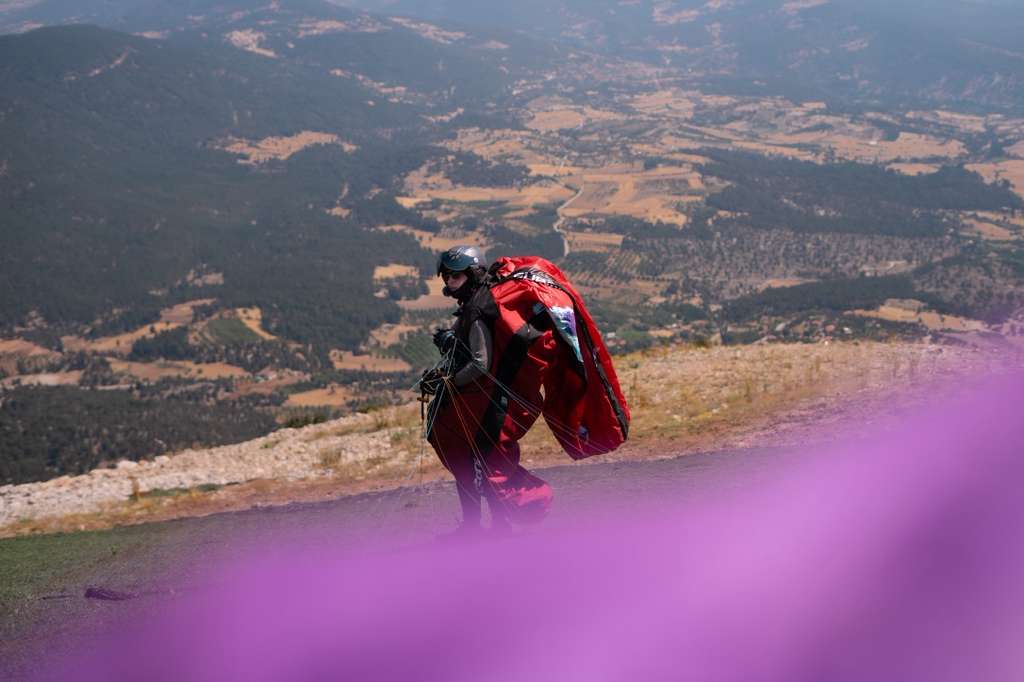
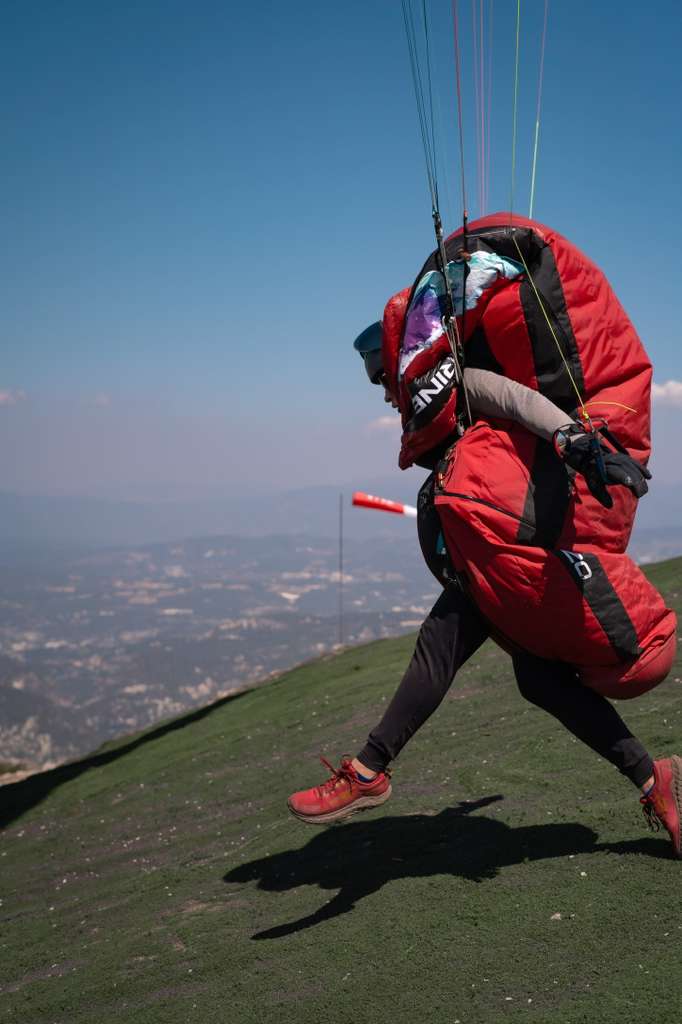
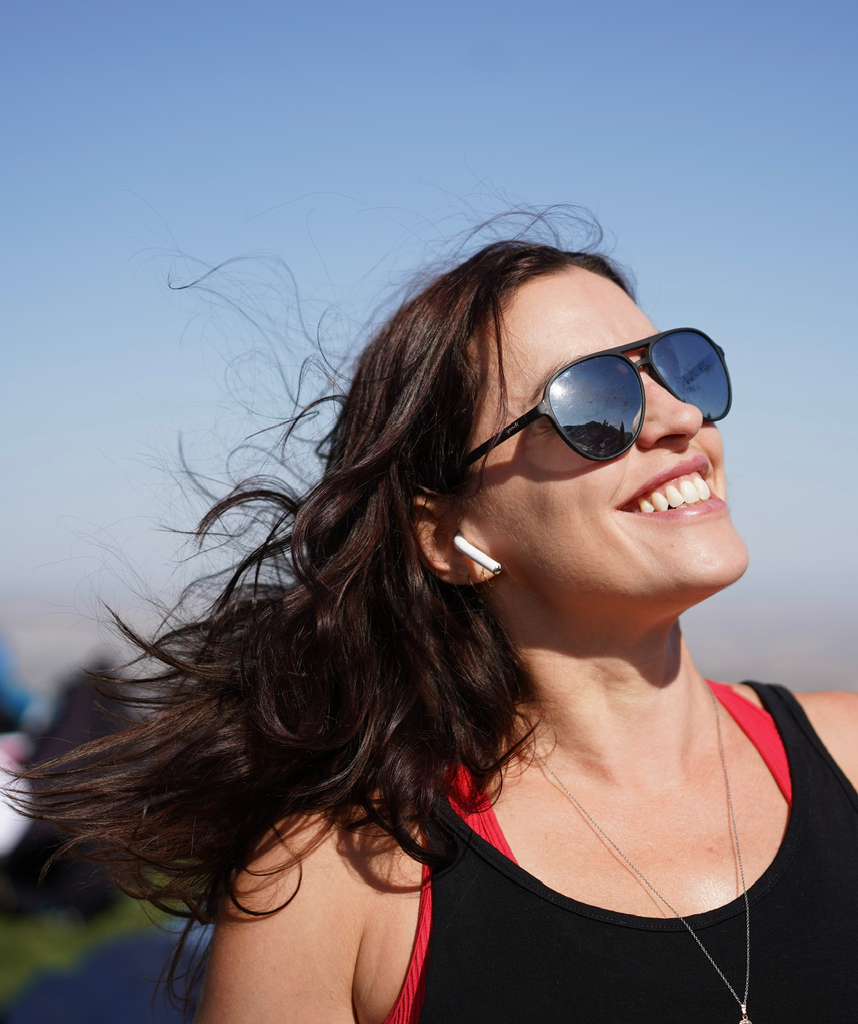
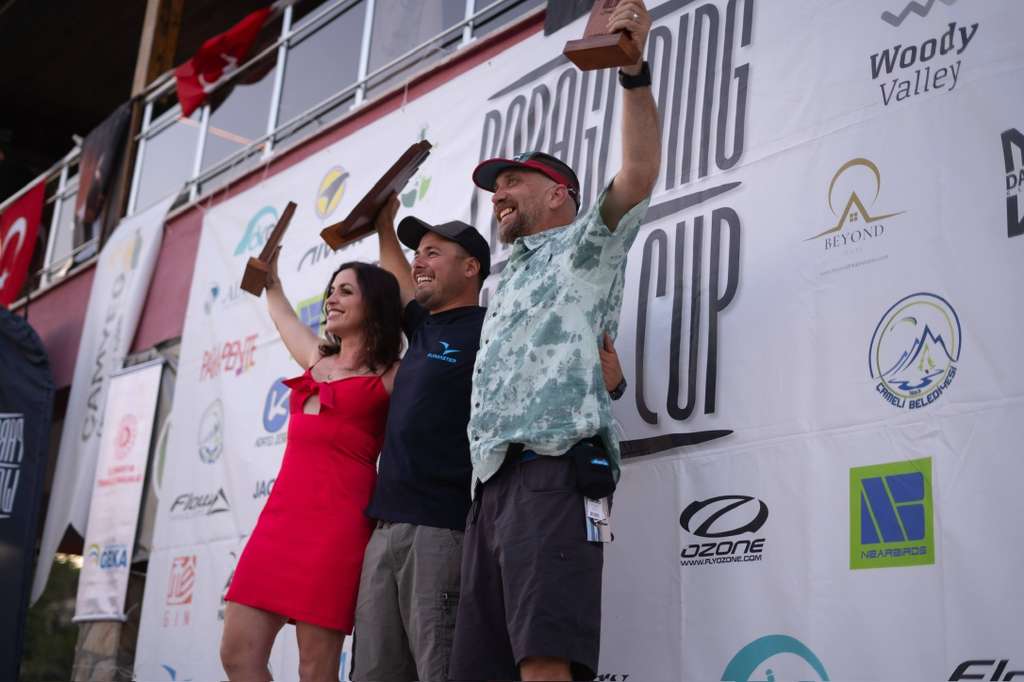
Violeta Jimenez has become one of the most elite competition paragliders in the world in a relatively short period of time. Her first World Cup was only 5 years ago in Aksaray, Turkey, flying a Zeno. Last year she was on the podium in the OVERALL, again in Turkey, this time in Çameli. But it’s been anything but easy. Violeta came to flying from a background in ballet and ultra running, and as Will Gadd says, coming to flying from non-gravity sports can be not just challenging but risky. In the early years Violeta had a number of incidents (reserves and tree landings, torn ACLs…) and one particularly violent accident in Mexico that required a long mental and physical rehab. This year at the Worlds in Brazil she took an unlucky tumble off launch which resulted in a badly broken ankle. But through it all Violeta has kept her passion for the sport, remained focused on her goals, and refused to quit. We cover a lot of ground in this one: the current safety debate in competitions, the recent proposed rule changes at CIVL, flow state theory, gender and inclusion in sports, mental health and recovery from accidents, and the pursuit of excellence. Enjoy!
Support the Podcast
A buck an episode, that's all we ask
If you like what you hear, please consider becoming a subscriber to ensure our high-quality content continues. You can also help contribute to a healthier, greener planet through our partnership with Our Forest.
See our donation and subscription options here.
Listen to the Podcast
Listen to us on all the most popular podcast platforms:
Violeta’s background in ultras and dance Transition to paragliding and early challenges Safety, risk, and accident management Debate on competition safety and regulations Impact of recent safety policies and decisions Personal motivation and pursuit of excellence Gender and size considerations in competition Mental health and recovery from accidents
Key Frameworks
Risk Management in Sports Flow State Theory Safety Regulation Debate
Sound Bites
“We don’t have enough data on safety.” “Flying in comps puts me in flow.” “I’m building my own tower in the woods.”
Chapters
00:00 The Journey Begins: Violeta’s Early Experiences 02:50 Overcoming Adversity: The Impact of Accidents 05:40 Competition vs. Free Flying: A Safety Debate 08:49 Understanding Risk: Data and Personal Biases 11:54 The Evolution of a Pilot: From Ultra Running to Paragliding 14:53 The Passion for Racing: Finding Flow in Competition 17:43 The Art of Flying: Building a Lifelong Passion 20:44 Navigating Doubts: The Reality of Competition 23:35 The Future of Flying: Community and Personal Growth 30:48 Building Personal Monuments 33:53 Navigating Competition and Regulations 41:38 The Impact of Gender and Inclusion in Sports 44:16 Personal Choices in Paragliding 51:42 Overcoming Fear and Injury 01:00:16 Looking Forward and Community Engagement
Gavin McClurg (00:13.199)
V, I've been dying to do this literally for years and I think the timing of this one is about perfect. We could probably revisit every year from here on out and do more of these, but you and I have known each other for a very long time and we've been part of this very dynamic community together for a long time and I have seen you kind of, I guess I would call it come up through the ranks and...
represent us at the Worlds and just dominate in the Women's and very consistently top 10 overall. You're one of the most consistent pilots, I think, on the World Circuit. And I was happily there with you at your first World Cup in Turkey in Aksaray in 2021, which is actually still, I think, my best World Cup that I've ever had. So that was meaningful to me and a lot of fun and a very cool place to
fly but I think that's a great place for us to start because in a sense it's kind of in the middle of your career you were just getting going with World Cups that was your first one at that point you'd already been through a lot and we're gonna talk about that and I want to let you just lead that off so get us up to 21 in Turkey you know encapsulate that part of your flying life and then
When we get to the end of that, we'll take it from 21 up to current and the things that have happened there, including the worlds in Brazil, which has kind of been the flash point for this whole civil and safety debate and the plenary that just happened. You had a terrible accident there. So we got a lot to talk about, but why don't we take it from Turkey and then kind of rewind the clock.
Violeta (01:53.837)
Mm-hmm.
Violeta (02:04.526)
That sounds great. So yes, Turkey back in 2021 was my first World Cup. I still remember it very fondly. And, you know, it's interesting that that was, think, where a lot of Americans started getting into World Cups who had not been before. I was one of them. This was after COVID. I think everybody was kind of jazzed to travel and get out there.
And for me, as you said, I'd been through some stuff. So at the end of 2020, I had a very bad accident flying cross country in Mexico. That was a weather related thing where, you know, the wind picked up quite a lot and I ended up taking a collapse close to the ground while I was trying to land. So I've written about that in cross country as well as like on my personal Instagram. So I won't.
drain the details of that necessarily except to say, you know, that I was hospitalized for quite a while and I couldn't walk for a few months, went through rehab, all of that. And so I've written about, you know, how after that accident, I was still, I still really wanted to fly, but I had to think really seriously about
how would I re-engage with this sport that I loved so much? And that accident came, you know, it wasn't the first time something had gone wrong in my flying. I'd thrown some reserves in competition, like when I started on a two-liner, I really didn't have a lot of education about how to deal with the two-liner. And so I had to throw a few times, that wasn't really fun. And so all of this kind of wrapped up into...
you know, me deciding after my big accident in 2020 that I wanted to do things differently. I didn't want to reengage with a sport in the same way that I had. And one of the things that I ended up concluding actually was that competition was a venue in which I would have different margins of safety than I had given myself in the past. That is an interesting statement to some people because some people
Violeta (04:17.4)
perceive competition to be more dangerous than free flying. I completely disagree. So I, I, and it depends on how you do it. Of course, there's always, you know, relativism based on who you are and how you fly. but to me, if you fly a big cross country flight, you're on your own. The weather is changing. Maybe you have people near you. Maybe you don't, maybe you're flying in a remote place. Maybe you're not. if something goes wrong, who will see?
Who will respond? How long will it take? How easily is it to get out? How easy is it to get to medical care? Now, as you mentioned, the world's in 2025, there was, that was a flash point where we debated some of these things in the context of competitions. But for me in 2021, when I was making the decision to engage more strongly with comps, I was like, hey, if I'm flying in a competition,
somebody's put a tracker on me, somebody's following me. There's a whole group of other people who are making decisions about whether it's safe to fly, who are watching the weather, who are extremely interested in whether they can continue safely along the course that we've set. Also, the course is set with attention to what the weather looks like because we want to fly a valid day. So you're not going to set, if it's a good, if it's a well-organized competition, you're not going to set some wild
Gavin McClurg (05:37.372)
you
Violeta (05:43.31)
crazy course line that is likely that we can't fly the whole way. So instead, you'll set something more reasonable. So that decision to engage more in competition actually came from a place of, I think this is, this can be a safer way for me to participate in the sport I love. And there were, were some other considerations there too. In 2021, I was flying a small Xeno at that
Gavin McClurg (05:47.239)
Mm-hmm.
Violeta (06:12.909)
at that World Cup in Aksarai. And that, I was flying more and more competitions, that's when I could no longer ignore the fact that I was a small person in a sport that optimizes size. And so I started to think about what do I have to do in order to be able to compete better with the rest of the competition? And so in 2022 is when I stepped up from a small Zeno to
a medium small Xeno and then later to a small Enzo. And it's interesting, we can talk more about ballast later. I might be one of the few people who's actually flown every size from 90 kg top to 115 kg top. And so I intimately know the differences in those gliders and there are safety considerations there too, of course. But I think that that gives us a little bit of a start.
Gavin McClurg (07:06.566)
Yeah, and mean, you're tapping into something that maybe let's get into later, but the big part of this debate is just watching it from the sidelines and then digging into it in various places, because there has been a lot, especially going into the plenary that just happened, but all the discourse going on in base camp and many, many, good intentions. But there's all this thing that, you know, A,
competitions are more dangerous than free flying. How do we know that? Do we know that? We don't know that. We have no data about this kind of stuff. This is not F1 where we're tracking every little single thing. And I don't know if this is a number that I have put out there a few times because I got it from Cross Country Magazine and I did some research and I couldn't find this. So this is again, data that it could be complete bullshit. But in Switzerland last year, there were something like
plus over 30 deaths.
I think maybe one or two, again, these numbers just take them a grain of salt. We're in competitions. It's just a dangerous sport, period. So like you said, I think many people would hear, oh, wait a minute, she's saying competitions are safer. No, we've always heard the other way. We actually don't know. We know that competitions, people push harder.
Violeta (08:05.559)
and
Violeta (08:11.681)
Yeah. Yeah.
Violeta (08:22.882)
Yeah.
Gavin McClurg (08:28.74)
Competition in general and every sport is going to have more accidents than just the non-competing because the numbers of people and that we push and we're trying to get results these kind of things. So it makes sense. Maybe it's true, but we don't actually know do we? It's crazy how little we know. We all have these opinions, know, goal this whole thing with end of speed and the conical ESS and that kind of thing. I've personally never seen an accident goal.
Violeta (08:44.929)
Well, exactly.
Gavin McClurg (08:55.75)
I've been doing this for a very, very, very long time. Is it more dangerous? I don't know.
Violeta (08:56.267)
Yeah, I think.
I think you're absolutely right, Gavin.
Violeta (09:04.589)
Yeah, I think what we're seeing, you know, with this flashpoint of the worlds in 2025 is a lot of personal biases and ideas playing out as though they're fact. And unfortunately, our governing body supports the promulgation of these personal biases and ideas because we don't have, we don't as a sport, you know, commission studies on this. There have been a few studies on paragliding, but not many, not a lot.
And so with, you the example of Switzerland, and I don't have in my mind the numbers of tragedies that occurred last year, but as you know, Gavin, in my professional life, I work in data science and actually specifically I work with risk. So AI risk, but I help people think about how to measure risk and how to measure what is dangerous for them. It's in a very different context in the professional world, obviously, than in
the sports world, but still, in order to understand those tragedies in Switzerland or anywhere else, you'd have to actually do a good analysis. So you'd have to look at, how many people were participating in competitions? How many people were participating in other types of flight? Can we control for other factors like age, like weather, that sort of thing? you know, there's all of that would have to be done. And so you're right that we don't actually know.
Gavin McClurg (10:26.669)
setting.
Violeta (10:32.941)
whether competition is safer or less safe. We don't have any data on it. We all have personal biases, myself included. I have good reasons, as I said, for making my choices. Also, you and I are different people, so it could be that comps are more dangerous for Gavin, but they're not more dangerous for Violetta. That's just something we have to accept. Of course, competition, yes, it can cause people to...
Gavin McClurg (10:42.63)
Sure.
Gavin McClurg (10:53.976)
Exactly. Yeah, this is the thing.
Violeta (11:01.869)
push harder, can cause, you know, people don't want to be the guy to call level whatever on the radio. They don't want to say it's level three because maybe somebody's going to think they're a coward or maybe their team won't get to goal or they won't get to goal or their buddy's going to beat them. All kinds of biases can play out there, but I'm here to tell you those biases are there too outside of competition. So the accident I referred to in Mexico in 2020, I was flying with a group of my friends.
Gavin McClurg (11:11.398)
Mm-hmm.
Violeta (11:29.097)
I got a bad feeling and I didn't say anything. that. I, I'm, I feel like those, those pressures exist in all types of flying. You have to be aware of them and you have to think about how you're going to mitigate them.
Gavin McClurg (11:38.47)
course they do. So you had this and it was a bad physical accident the one in Mexico it was a hell of a comeback like you said it took months a lot of rehab learn how to walk again you know it was a life flight I guess back I wouldn't I don't know you call that from Mexico but you know that was it was a big deal
And you said you'd had others before that. had the way early in your career, had the hike and fly accident out at Mitch's deal in California. I you broke your leg, right?
Violeta (12:14.956)
I tore an ACL and I broke my back. The back wasn't so bad, but the ACL needed surgery.
Yeah, so that was in the context of hike and fly competition. Yeah. Yeah, and so I had been through it.
Gavin McClurg (12:23.777)
Okay, so you've been through some things.
Gavin McClurg (12:30.533)
Let's go back even further. We've got a delay here, sorry. That's tough. Let this thing catch up.
Violeta (12:37.778)
okay.
Violeta (12:42.622)
Okay, we can edit.
Gavin McClurg (12:46.755)
Yeah, we can totally edit. I'm sitting outside my garage and it's probably my internet on my end. let's go back even further then because you've, your background, as I understand it, was in ultras. know, so you've been an athlete your entire life. What do you think it was, particularly about this sport and your approach that came from
Violeta (13:02.07)
Mm-hmm.
Gavin McClurg (13:14.501)
mean, that's not, don't, know, Will Gadd always talks about it, that, you know, gravity sports, flow sports are ones that he feels when people come from those kinds of sports, it's a...
It's an easier transition. It's a more logical transition as opposed to climbing, weightlifting, or ultras, that kind of thing. But back in your early career, when you came here, I remember when you were dating Mitch and you came here to Sun Valley, we were all looking at your lines at the end of the day going, holy shit, she's bold. I mean, you were a new pilot just sending these deep lines and we were all pretty worried about you.
Violeta (13:28.694)
Yeah.
Gavin McClurg (13:54.894)
You know, and you had these, and then you had an accident or an incident, like you said, reserves and that kind of thing. And you know, there were a lot of us that were pretty worried about you. you know, but you've, yeah, so let's take it from your background and getting into it and just your hunger for this because you know, there haven't been many people I've been around in my career that have had so much hunger and desire.
Violeta (14:05.175)
Mm-hmm.
Violeta (14:14.881)
Mm-hmm.
Violeta (14:22.036)
Yeah, and I think, yeah, you bring up a number of interesting points. So I came from ultra running and I was a dancer when I was younger, ballet. And so one of the things that got me into flying was I had just never considered, I didn't even know it was a possibility. I grew up in New York City. I didn't see people flying.
I was like peripherally aware that hang gliders existed, but I had never like, you know, a lot of people have this story of like, oh, I would watch birds and I'd want to be a bird. Like that was so far from my conception of what was possible that it, it just never occurred to me. And so when I was introduced to it, which was, you know, I was living in Atlanta, Georgia at the time, not a Mecca of free flight exactly. I saw it and I was like,
Gavin McClurg (15:08.344)
No.
Violeta (15:13.938)
this is this exists, first of all, and I just graduated from my master's program. I so I guess I was I was feeling like, all right, what comes next in my life? And I've been doing ultra marathons for four years. I was really into that. And the idea of being able to take this machine and travel around the world and see the mountains that I ran on from the air, I was like, this is incredible.
Like, I want to do this. And so that was where it started. Now, know, rewinding the clock to me almost 12 years ago now, I had no idea that it would take me where it has. Like, I just didn't, I didn't have context on the sport. So I don't think I, at that point, could have imagined, like, how deep the well goes. But as I moved forward with it,
it kind of became clear to me as it becomes clear to a lot of people that if you want to pursue this in a way that seems reasonable or even if I wanted to pursue it in a way that honored the dream I had when I began, you kind of have to go deep. And deep means different things for different people, but my dream was to see things from above and not be terrified, you know, to...
Gavin McClurg (16:27.525)
Mm.
Violeta (16:37.128)
explore and and be able to feel like I was doing that in a way that was reasonable and so I think I started to accelerate on that on that path so when I was in Sun Valley with you guys you know I was on my little sea wing you guys were all you know flying DS and CCCs there was no way I could keep up with you but I was like well this is a golden opportunity for me to do what I want to do maybe I have to be alone but but I can do it and and so
that that was, I think that that year was an inflection point for me where I was like, I see a path, I see a path to get to do the things that I want to do, to be able to explore and to take this around the world more than I have. And so I think that's what we were seeing there. Then after that is when I switched to a two liner. And as I said, I there was there was a learning curve there for me that
took a little while to resolve. So I went from feeling very, very comfortable with my little C-wing to being on a D-wing that acted differently. And it took a while for me to figure that out. I think there's a little bit more knowledge in our community now about how to fly two-liners. And certainly, of course, know, now six, eight years later, we have
two-liner seas, which are great. You could make that transition with a little bit more ease than I did. The other thing that I think about is, you know, now again, I've had the experience of flying small two-liners and bigger two-liners, and the small ones are indeed more punishing. They're more difficult, and when something goes wrong with them, it's harder to recover. So I don't know...
Gavin McClurg (18:10.084)
you
Violeta (18:33.279)
There was some of the ways that I would recommend to somebody to move from a three liner to a two liner were not available at that time that I was doing it. But yeah, there's certainly there's certainly a better way I probably could have done it. And so the other thing that I wanted to address Gavin is you mentioned the difference of coming from a flow sport versus another type of sport. And so, yeah, like I said, I was a I was a runner. was a dancer. I didn't participate in flow sports. I.
that wasn't part of my background. And so when I came into this, you know, some of the things that you learn from ultra running are applicable. mean, everything has certain things in common, but with flying, for example, there is more skill involved than there is with ultra running. So with ultra running, there's this weird little, there's this weird big part of the game, which is you can try harder and make up for a certain amount.
You can't do that in flying. You can't flap, you know. At a certain point, if you don't know what to do in a moment, you don't have recourse. I mean, you can throw your reserve or, you do other things depending what's going wrong. But those are, you know, so those are wildly different sports. But on the other hand, I absolutely advocate for people coming to flight from wherever they're coming from, you know, if they feel called to it. I think it would be wonderful if we
Gavin McClurg (19:30.596)
Yeah.
Gavin McClurg (19:44.12)
Hmm.
Violeta (19:58.966)
had more people like Will Gad educating all of us about risk and what it looks like and if we had a better way to talk about it and engage with those conversations throughout our flying careers.
Gavin McClurg (20:14.084)
He articulates it better than anybody and those of you listening, please follow him on whatever platform you dig his poster Awesome
Violeta (20:17.279)
Yeah.
Yeah, he's I
Violeta (20:25.235)
They're awesome. He's one of the people that I recommend to everybody.
Gavin McClurg (20:26.082)
I mean, he's made a career out of talking about risk too. mean, he's just very, very good at it and understanding it and seeing the glass less than half full. He's looking for what's gonna break the fucking glass. That's what he likes to say. Not be so optimistic all the time is his approach, which has served him well. Why the gravitation?
Violeta (20:32.64)
Yeah.
Violeta (20:42.057)
Yeah.
Violeta (20:49.321)
Well, it's very honest.
Gavin McClurg (20:52.228)
You've had this, I mean, you can send it like anybody. And I know you're very passionate about just flying big lines, always have been from the beginning, but why the passion for specifically racing and high-end racing? mean, like you said,
Violeta (21:06.731)
Yeah.
Gavin McClurg (21:09.57)
You've been through an awful lot. mean, there must be, you know, there must be conversations at your house with your family and them going, what are you doing? I mean, don't put us through this again. You know, you've been through an awful lot. Somebody once told me that, you know, she'd die for points.
Violeta (21:12.267)
Mm-hmm.
Violeta (21:16.683)
Yeah.
Violeta (21:26.793)
That's not true.
Gavin McClurg (21:27.78)
I know it's not, you really have, I mean right from that one in Turkey, you gravitated immediately towards World Cups, you held on tight, you have held on tight. And as an American participating in this, this is all self-done. You're self-funding it, it's your own time. We don't have any backup, we're not the French. We don't have anybody helping us through this.
You've learned it kind of on your own. mean, obviously our community helps teach us, but you have dedicated an enormous amount of time to this. Why?
Violeta (22:10.153)
Yeah, I think that's the million dollar question actually, and that's a question you have to re-engage with. I mean, not just if you have an accident or if something goes wrong, but to follow Will's logic, you should re-engage with that basically at every point throughout your flying career. When you're considering something big, you should ask yourself, why am I doing this? What is it worth to me?
Gavin McClurg (22:28.311)
every time.
Violeta (22:36.927)
because this is a dangerous sport and not just paragliding, of course, but many adventure sports. Like you should really be conversant with that. You should be conversant with what the pros are for you. And so, you know, that could be you want to win something or you want to send a big line, you want to see something, but be really clear about that because there's a trade-off potentially that you might be making. And so this is a conversation that I've had with
with myself, with my friends and family, you know, several times. And I probably will have it many more times as long as I continue flying. And there will be a day that I don't fly anymore, but I just don't plan for that to be any time soon. So I think as to why comps and why that was interesting, it is, I am passionate about
progression. know, if you if you read books on flow and on even happiness and how you gain happiness in your life, this gets a little abstract and philosophical, but actually being fully engaged in something that you really have to pay attention to that puts you in flow and that generates happiness for us. That's a really good way. So that's the
intellectual take on it, but we've all felt it, you know, when you've been really fully in something and you're not thinking about anything else. Your mind is clear. It's blissful, to be honest. Now, could I find that state in another place besides comps? Of course. You know, there's a million ways that you can get into this. You can play piano, you can dance, you can, you know, kayak, you can whatever. You can do acro. But I started feeling it in comps.
Gavin McClurg (24:09.704)
Yeah.
Violeta (24:27.42)
where for me, what I love about comps and one of the things that I realized I'm good at is observation. And so that total engagement with your environment where you're noticing the wind, you're noticing the clouds, you're noticing the other people, that's a big thing in comps, they don't get outside of it. You're noticing how you feel, how the wing feels.
all of that comes together and you make a decision as a result. know, and some of those decisions are not conscious once you start getting better at them, of course. You know, you're like, this way and that, that I go this way. It, you might not even be able to really articulate why you went right instead of left. Maybe if you look back, you'd be like, it looked a little brighter on that side. I felt like there's a little more sun over there. Or maybe you'd be able to say, I saw a bird climbing. I saw those two guys climbing.
these guys were getting a better line than I was. Maybe there is something, but all of that engagement leads to a really incredible flow state for me. Where, you know, and the thing about a comp is generally you get to do that over a few days, definitely. Like comps throw you into this thing where you have to be focused. And if you can't be, you probably shouldn't be flying one. So.
There's that engagement part and then the progression part, which again, there's research showing like, you know, being able to progress and get better at something also very satisfying. That's the intellectual side. Emotionally, I feel that. So when I feel I have an opportunity to continue to progress in something, that's really compelling for me. So starting in Turkey, for example, I mean, a little bit before then I'd done some national comps before that.
I was like, this is really interesting. And I think I see where I'm fucking up, you know? And so the idea that you can see it and fix it, and then if you do, you know, and you're like, yeah, I got it. Okay. You know, that becomes very compelling. And so of course later that progression slows down enormously. And so maybe you're, you know, you're not going to get quite as much out of it, but
Violeta (26:43.804)
as we said, came from ultra running, which, you know, I used to run for fun, through the night. Like I did a hundred mile races. So I, nobody has ever accused me of not being able to stick with something or, you know, not being able to keep myself occupied during like 36 hours of running. So not a problem for me. So yeah. so I gave you, yeah.
Gavin McClurg (26:53.187)
Yeah.
Lack of a lack of tenaciousness is not something you're gonna get quipped by no definitely not yeah You and I had a cool
Violeta (27:14.842)
So I gave you a sort of more intellectual examples of what I find compelling about flying. But this is where we get into sort of the art of it. And I do like writing about flying because I feel it's the only way to really describe something is a little bit more literary in a sense. I compare it to being in love. I compare it to...
you know, having a lifelong love or a lifelong passion for something. That's what this has become for me, is something, it's something I'm building. And I'm building it with other people, but really I'm building my own little tower in the woods somewhere. It doesn't entirely matter what other people are doing. I'm building the story of my life. This is a thread in it, a big thread.
that's allowed me to grow in a lot of ways that I wouldn't have otherwise. I chose a flow sport. I chose something I'd never heard of that would be incredibly difficult for me. And that made it compelling. If it's easy, it's not that interesting, is it? If something comes easy, you don't appreciate it. But something that comes hard, something you have to work for, that's a little more valuable.
Gavin McClurg (28:32.429)
Have there been doubts?
Violeta (28:34.61)
Of course. Yeah. And so most recently, you know, I, as you mentioned, I had an accident at the Worlds. And we can, we can talk more about that, but that was a moment of severe doubt for me, where partly in the context of what was happening with the sport, I was like, do I want to engage with this? Do I feel good about flying in this way again? And
I started flying again in January in Mexico, which is a place that I love. As you know, we go to VIA every year for the Monarcha competition. And I went there even with pretty big doubts about, I was like, well, I like this. How will I feel? And just to get back to the question of what keeps me passionate, when I was thinking about that, Gavin, I was like, I don't, I bet I'm gonna like flying again. I'm gonna make that bet.
But I know what will feel really great is re-engaging with my community. So that's also something that keeps me coming back in a lot of us. We have a pretty, pretty special thing in the US.
Gavin McClurg (29:44.173)
Yeah.
Yeah, it is incredibly special. And what about doubts more related to what end? mean, what I mean by that is, you you've got a really good chance of becoming world champion. If you ever run that through your mind, do you think like that or do you think more, I mean, we're all supposed to be thinking about process, but you know, we do have egos.
Violeta (30:13.641)
Yeah.
Gavin McClurg (30:15.597)
Do you think about that? And if you did, hey, would it matter? Would it change anything? Would it just mean, now I want another one? Because we have seen the biggest names in our sport, especially on the women's side in the last few years, they're done. They've had enough. It's played out. They've been, you Merrill, best ever, done.
Violeta (30:20.862)
Yeah.
Violeta (30:34.569)
Yeah.
Violeta (30:39.453)
Yeah.
Gavin McClurg (30:40.739)
Laurie, best ever done. They've come and gone. And men too, I'm not singling out women, it's everybody. I think there's this side of it that there's not even really glory. There's no money, there's not really glory. I everybody forgets. I mean, I don't remember who the world champion was two times ago. it's, yeah, also.
Violeta (30:58.29)
No, yeah.
Gavin McClurg (31:09.549)
Do you have doubts from that side? Is there enough intrinsic value to these things?
Violeta (31:12.594)
Yeah.
Violeta (31:16.659)
So that's why I said a minute ago, you I'm building my own little tower in the woods and I don't expect it to be, you know, a pyramid that people are going to look at 100, 200 years, 500 years from now. It's just my, it's my little tower I'm building, my monument to my life. And so do I think about placement? Yes, I do. I'm a very competitive person. So it matters to me when I win or, you know, when I don't win, which is plenty of that too.
But is that the driving force? I agree with what you said, it shouldn't be. We have to be enraptured by the process, which is what I described to you. The process of progression, the process of being in flow, the process of playing the game. If you don't like that, if you don't love that, then yes, after you win a World Cup or you win World Championship or whatever, you stand up there with a little plastic trophy and you're like, is this it?
Is that all? And it would be if that's all you care about, you know, a plastic trophy, a placement that, you know, people will probably not remember or will conflate with something else. So, so I don't think it's healthy to focus on that. It's, it can be very healthy and very, I use the word in rapturing, to think about your progression.
as maybe this is an artifact of the progression you're going through. This is a side effect of the piece of art you're making. A brick in the tower that you're building, to follow my metaphor. And so, do I want to win? Yes. Is that the only thing I care about? No. When I win, will I stop? No. I haven't so far. Do I think that the way I continue, you know, creating the story of my life and building this
this beautiful thing will change over time? Yes, it will. So it could be over time that I fly less comps and I focus back on big lines. That could be a thing that happens. And to be honest, Gavin, right now, will I become world champion? That opportunity has been taken away from me by what happened with the civil plenary. It was also taken away from some of the past world champions. So we just hamstrung our sport and we cut a
Violeta (33:41.991)
bunch of top competitors off at the knees. And that was owing to the ballast issue, which we can talk more about. But so if I was focused only on that, I would be really disappointed right now. And I am disappointed and I'm angry, but there are other ways for me to engage with the sport. And if a bunch of fools to be kind, well-intentioned fools to be really kind, will prevent me from pursuing
my sport in the way that I wanted to, I will find another way. I have never let somebody stop me from continuing with this thing that I love.
Gavin McClurg (34:20.99)
I mean my take is that there's been enough backlash and enough, you know, vitriol about this whole thing that I don't see this taking place. yeah, I mean at the moment it doesn't look good. Let's spend a couple minutes no more on that just so people know what we're talking about. There's a lot of people that have no idea what we're talking about. So the plenary just happened. This is an annual, is it annual or?
Violeta (34:45.331)
Yeah.
Gavin McClurg (34:50.462)
every other year. Annual thing, okay. So that just happened and there were a number of things that got voted on to address safety, which kind of came out of the thing at the Worlds, know, the death at the Worlds. But like you said, well-intentioned, but yeah, let's give us the summary, the summary summary.
Violeta (34:51.343)
It's an annual thing.
Violeta (35:16.477)
Yeah, sure, sure. So, yeah, there was, as we said, the worlds was a flash point. There was a big focus on safety. And there was a lot of pressure on civil, which is our governing body, one of our governing bodies to act, to do something to respond. And so, unfortunately, because we don't have a lot of data, as we talked about regarding what causes accidents, we picked certain issues which
in my mind and in many other people's minds were not necessarily the ones we should have focused on. Moreover, the way that those played out at the plenary, we ended up with kind of the worst of all worlds. So I'll just cover a few of them. One was we, I'm saying we again kindly because a lot of us disagreed with this. We chose to reintroduce a 33 kilogram bag limit. This existed before 2019 and it was
Abolished because people hated it and people tried to cheat, you know, yeah
Gavin McClurg (36:17.09)
I was back in my time. well, I remember those times. It was horrible. I hated that. Everybody hated it.
Violeta (36:21.829)
Yeah, nobody liked it. Even larger people didn't like it. So for those of you who don't fly comps, 33 kg sounds like a lot, but consider that a comp glider with a comp harness and two reserves, you're going to sit somewhere in the 25 to 28 kilogram range no matter what you do. So the rest of the weight that you have, maybe that extra 10 pounds, is everything else you have to carry. That could be
your drinking water, your instruments, like, you know, any personal things like your wallet, your cell phone, like whatever. And it's actually not, it doesn't give you a lot of choice in there. So people really didn't like it. People tried to cheat the system in various ways. I won't rehash history, but this was voted back in. What this does is, you know, there's, there's a, again, not to get into it too deeply, but bigger gliders go better, just in general. That's a physical, a truth.
related to physics. And we all know that again, I have maybe one of the few people in the world who's flown gliders, comp gliders from 90 kg top to 115 kg tops. I can tell you my success in competitions began when I got on a glider that went to 100 kg. If you're below that, you are severely handicapped. cannot stay with the gaggle. You just can't play the game like that flow state that I love not possible.
And so this this 3033 kg ballast limit that was reintroduced came with an exception. You could ballast up to 95 kg doesn't help. So for somebody like me, I carry a lot of ballast because I want to compete at the at the highest level. Basically, that would make that would force me to fly an extra small end zone, which goes terribly and is actually dangerous. You know, we call it jokingly the acro end zone or another.
extra small comp glider or a small xeno. So I could no longer participate in my sport in a way that I was interested in. And the same thing is true, you know, for actually our most recent world champions, Baptiste, Maxime, you know, a lot of the really good French, many women, not all women.
Violeta (38:39.56)
And many small men too. There's a lot of people out there who would be pushed down at least one size, maybe two sizes. So that, you know, I have worked with civil in the past. I resigned actually as a result of this. And I warned them, this is, you're disenfranchising a lot of your pilots if you pass this ballast rule. It is sexist because it particularly affects women and it's racist.
because it particularly affects people, smaller bodied people, which tends to be like Japan, Korea, et cetera. Like there's of course not all people are the same size. have big and small examples from any country. They didn't listen. And I want to address the fact that I'm using these inflammatory words like racist and sexist. I am very careful with the words I use and these are true. So,
you can have good intentions, but you need to face up to the consequences of what your good intentions reap. mean, the road to hell is paved with good intentions, let's say that. So we ended up with this worst of all world situation where we voted down there was a proposal for using equalizers, which are these sort of pool noodle things you stick on your back risers. And they're supposed to equalize the difference between the sizes. So we voted that down, which...
To be fair, I agree with that. They weren't tested yet. So it didn't make sense to vote on them yet. So all of this kind of rolled out out of order, for example, we don't have evidence that ballast is causing a lot of a lot more accidents. We don't have evidence that noodles work the way we think that they will. What we do know is we didn't pass the equalizers. We did pass the ballast limit. And now we just cut the knees off of a bunch of competitors, myself included, from participating in
it's mandatory at category one competitions and recommended for category two. So yeah, that's that's my synopsis Gavin. Yeah, yeah. And so a lot of cat twos will probably like it's a pain to do away and stuff. So a lot of cat twos will probably not do it. But that's up to them.
Gavin McClurg (40:36.641)
Yeah, I run a cat too, not for me, not for me.
Gavin McClurg (40:47.903)
Yeah. Yeah. Yeah, but this, mean, this is big. I mean, this is big for the Europeans, for the worlds, you know, for the Pan Ams. It's enormous. It's disenfranchising. It was a huge mess. I think most people agree with that. And so it'd be interesting to see where we go here. you know, I don't think it's too early to throw in the cards for sure.
Violeta (41:10.554)
Of course, and I too hope that, you know, civil will put a pause. The Bureau can choose to pause that decision and wait for a better idea. They could choose that. It's up to them. This was, you know, coming back to kind of my personal context, it was kind of wrenching. Like I woke up on International Women's Day to see this, you know, I'd gotten texts from a bunch of people, like they passed the balance limit. And I was like, what?
Gavin McClurg (41:17.953)
Yeah.
Gavin McClurg (41:37.259)
Alright.
Violeta (41:37.448)
And, know, Gavin, one of the questions that we that I get, I started the US women's team with some of my good friends here in the US and the US is way ahead of other countries as far as the number of women that we have competing on the world stage. We've got four of us right now who are really good enough to be at World Cups all the time, which is amazing. I get questions even, you know, at the most recent comp I was in at Columbia at the British Open about what are you guys doing? How can we make our program better?
And my answer usually has to do with culture and the culture around how do you speak to women on launch? What do you encourage women to do? Now the answer is structural as well. What do you put in place? What rules and regulations do you put in place acknowledging that women have, in general, some different constraints and different needs than men?
you know, not to hammer this home too far, but another thing that was changed at the most recent plenary is women. There was a proposal some years back from Claudia Bulgakov, who's another of those fantastic women pilots who, you know, is not competing quite as much anymore, although she still is. This proposal was to require that when you send a team to the worlds, one of the scoring members be a woman. And this proposal was made specifically to encourage women in competition and to encourage the governing bodies in each country to have
an incentive to help bring women up in competition. So they chose to change that. They were trying to make it more equitable for smaller countries, which I don't know if the math works out on that, by the way. We'll have to see. But in the meantime, what they did was they made it so the woman on your team does not have to be a scoring member. And so now that, you know, I am willing to bet the questions I get a lot about how we can grow our program, a lot of that's going to go away.
Because suddenly that incentive is gone. And you know, if that sounds pessimistic to you, I understand. But, you know, we tell children often, don't pay attention to what people say, pay attention to what they do. And so, if you say you care about having women in your sport, if you say you care about inclusion, and then you show by your actions that you do not do it,
Violeta (44:00.646)
You do not enable things that would actually allow them to participate and that would allow the sport to grow. You don't actually care. So that proposal could have been written differently. It could have been workshopped if anybody in the room cared about preserving the incentive for women to stay in competition. They didn't. So I, you know, I'm a little passionate about this because it would have been so easy to not screw up so badly, but here we are.
Gavin McClurg (44:29.728)
All right, yeah, it's kind of like a double hammer, wasn't it? Okay, well, that was a great articulation of what's going on there. I'm gonna do an about face here, completely change the subject for a moment. Yes.
Violeta (44:33.755)
Yeah.
Violeta (44:43.227)
I want to talk about personal choice though, Gavin. So do you want to, do you want to like pivot to that a little bit? So, I mean, cause that kind of follows on this. Like, you know, when we think about, when we think about ballast and why you would choose to carry so much, know, which I don't like it to be clear. don't enjoy carrying that much ballast. It's, it's a huge relief. I come home and I fly my hiking flag glider and I'm like, wow. I can run around launch. This is amazing. I can hike with my stuff easily.
Gavin McClurg (44:48.746)
Sure.
Violeta (45:12.731)
So it's not that I want to do it for some sick, twisted, you know, sense of fun. I did ultras, but I'm not actually that much of a masochist. But this is a sport in which your personal choice matters. Your choice about, you know, we were talking about Will Dadd and his advice on thinking about risk and mitigating risk. And we said, you know, what is something worth to you? That's a choice that you have to make. And so if you are going to do something like fly with ballast and
Gavin McClurg (45:20.574)
Yeah.
Violeta (45:41.735)
consider taking off or landing with ballast, which is more difficult and potentially more dangerous. You got to think about that. There are ways that you can train to make it better, but you got to think about what that means. And you have to accept like, okay, I'm okay with this risk or not. And, you know, this is, these are choices we make throughout our flights, not just with ballast, but what wing do we fly? How do we fly? Where do we fly? How do we respond when something goes wrong?
An amusing anecdote is, know, Jenny O'Neill and I were talking after a task at the British and in Valdinio and she was describing how, you know, she was flying low over a city and she was like, I can't do this. I've got to go land. Like, I don't like it. And she was like, I watched Kevin Philippe, who we all know, very bold pilot. She was like, I watched him just blast over the buildings. And she was like, but he flies with a reckless abandon that I just can't match.
And, you know, that's his choice. And we all know Kevin, fantastic pilot. Yeah, reckless is a word people have applied to him before. But yeah, it's beautiful to watch. It's beautiful to watch that doesn't mean I have to make the same choices. It doesn't mean Kevin needs to make the same choices as me. And in competition or XC or whatever you do, like that's it comes down to your choices. What are you willing to do? And, you know, there's a great conversation to be had about what an
Gavin McClurg (46:55.082)
Hmm.
Violeta (47:06.839)
competition organization's responsibility is versus the pilot. But let's be honest, when it comes down to it, you're the pilot in command. If you get hurt, doesn't matter if somebody says sorry, it's down to you.
Gavin McClurg (47:20.99)
Mm-hmm. Yeah, and that's the main thing that I feel gets lost. And there was a big debate this year about the X-Alps. That was the same thing. And I feel like that's what gets lost in this.
Violeta (47:29.745)
Yeah. Yeah.
Gavin McClurg (47:33.744)
I had a great chat with Kriegel a while back on the podcast and he talked about that there's, you when we have these accidents, it's kind of this wave, right? When you have an accident, everybody wants more safety. Then you got some safety and everybody wants more performance. And it kind of just bounds back and forth, up and down, up and down, like a wave. And, you know, we can do a lot of things, say from a task standpoint.
Violeta (47:37.105)
Yeah.
Violeta (47:42.556)
Mm-hmm.
Violeta (47:50.619)
Yeah. Yeah.
Violeta (47:59.665)
Yeah.
Gavin McClurg (47:59.669)
We can just send everybody out in the flats and keep them out of the rotor and keep them off the hills. Who would want to participate in something like that? It would just kill it. Racing's done. Some people, yeah, sure. Some people want to do the whole fishbowl around and around and around and That's being proposed as one way of competing and not personally interesting to me. And so, I think we're all drawn to this.
Violeta (48:02.065)
Yeah.
Violeta (48:08.091)
Maybe some people, but yeah.
Violeta (48:17.948)
Yeah. Yeah.
Gavin McClurg (48:26.718)
because of the risk in a sense, because of the adventure, because we don't know where we're gonna end up. I mean, there's a lot of beautiful things because of danger and risk. And you just can't eliminate it without making it really boring. Then it's a different sport. It's something else entirely. And so I think that's often what gets lost is that there's a lot of emotion and there's a lot of social media and...
Violeta (48:42.033)
Yeah.
Violeta (48:55.025)
Yeah.
Gavin McClurg (48:55.754)
There's a lot of imprecise words.
Violeta (48:59.141)
Yeah, I completely agree with that. Again, as I said, I'm personally very careful with words. They're one of the, you know, primary ways that I like to try to communicate with people about this sport is through writing, because I can consider really carefully, what am I saying? How do I want to say it, etc. And not everybody is so careful. That's okay. But with social media and with these accidents, I mean, I agree with
in terms of like with many sports, there's, you know, sort of a sine wave, a pendulum, you swing one way, you go back the other way. And there are some things that, you know, probably an organization can do and should do to make things a little bit better. Like one of the things that Sybil did pass at the plenary was a requirement for better medical personnel, which I felt strongly about since, you know, I could have lost my foot at...
you know, in Brazil at the Worlds, if there hadn't been some doctors brought by the French and the German team who helped out. So I think, you know, controlling what you can, having some good medical personnel on launch and landing, fantastic idea, you know, that that's a reasonable thing to add to a big international competition. Hard to add that level of care to every competition in the world, but, you know, so there are some things there. And then, you know, honestly,
Gavin McClurg (50:10.304)
Sure. Yeah.
Violeta (50:21.966)
The position I resigned from at Civil was a pilot. It was called a pilot relations officer. was created in the fall after the worlds. asked, you would you help us communicate better with pilots? Which I was like, you really need to do better with this. would, I'm happy to help. It's just, I need to be able to stand behind their decisions. And I could not after, you know, the events of the last couple of weeks. But yeah, like some of the way that you communicate right now, we have
secret voting. So there's no record of how each country delegate voted for each proposition. And I gotta say, Gavin, like, you know, maybe I'm very American about this, but if you have secret voting, you are rarely on the side of the angels. So
Gavin McClurg (50:53.535)
Mm-hmm.
Gavin McClurg (51:08.649)
Yeah, that's not very democratic, is it? Yeah. for one second. I'm getting all this clicking, like something's typing on your end. is it your earrings? It is.
Violeta (51:12.59)
not very democratic. So how we communicate is important.
Violeta (51:23.718)
Shoot, that could be my earrings. Okay, fixed. Okay.
Gavin McClurg (51:29.535)
Okay, Miles that was 5130. Okay, yeah, some interesting things happening and I'm glad you're fired up about this. People gotta stay fired up and hopefully there will be some better resolutions. They won't be perfect, we know that, but hopefully things will get better. We're buttoned up against my...
Violeta (51:37.818)
Yeah.
Gavin McClurg (51:55.04)
time frame for having to end but before we do I really want to switch gears here for a moment because you and I had a great talk in Valle. It was this year after your bad accident in Mexico. You said that was 2020, right?
Violeta (52:10.512)
Mm.
Yes, so that would have been 2022 at the Monarcha that we spoke.
Gavin McClurg (52:16.104)
Yeah, so this must have been 21 maybe or maybe even 22. But you, a common thing we talk about on the podcast is fear injuries. Many people in the sport have had them, either emotional or from a physical accident. I just did a great show with Serena about her accident. And you had some great tasking you to come up with your memory of that. But.
Violeta (52:25.082)
Yeah.
Violeta (52:33.466)
Yeah.
Gavin McClurg (52:43.773)
Because of that accident, you went through some fear injury stuff, which I was surprised, I didn't know you had. Tell me what, tell us what you learned, what you had to go through, that process.
Violeta (52:50.128)
Yeah.
Violeta (52:59.364)
Yeah, so, I think when you have an accident, the assumption should probably be that there's going to be some kind of impact on you. It helps, and you've talked about this in the past, Gavin, if you understand what happened. If you don't understand what happened, then, you know, it's this terrifying black box that you can't open. But assume there is a monster in the box and open the box.
is sort of my advice there. So the way I opened that box, I I had a lot of time to think while I was laid up. I thought about what went wrong. I thought about what I could have done differently. And I also, you know, I sought help. There's, there are psychologists who deal specifically with PTSD, and there are some really great methodologies that they can use to help you identify and mitigate some of the things that
you know, might still be preying on you after an accident, like EMDR. that's classically that's been like using light therapy to basically you'll talk through what happened with this, you know, light therapy. And the research shows that actually the reported impact of the event will start going down as you talk through it with this.
bilateral stimulation. You can do with tapping, which is, I was doing this after COVID, so I was remote with the person I worked with and they'll have you like tap like this or on your knees or something like that, because they can't put a headset on you. And that also works. Really interesting research about that. They think it's, you know, they're something about like in our past as, being able, it gives you the sense that you're going away from the danger. You're fleeing from the danger.
Psychologically in your lizard brain. I'm not a psychologist, but there's some really interesting studies if you're interested in learning more about that. But in my experience, it worked for me. Did it work right away? Is it like a 30 minutes and you're done? Uh-uh. No, don't expect that. But I mean, there's a value to just talking about what happened and kind of teasing out what parts were actually the worst for you. Because when you think of an accident, there's a lot of shitty stuff there.
Violeta (55:19.654)
what ends up sitting in your mind could be the moment that you didn't make the right choice. It could be the moment that you fell out of the air. It could be the moment that you hit the ground. It could be when you you you realized there was something wrong with your leg. It could be being in the hospital. So you know that's obviously a kind of a distressing thing to think about but
Gavin McClurg (55:36.095)
you
Violeta (55:45.318)
Again, the monster will stay in the box and the box will stay in your mind and that monster will come out at the times you don't want it to if you don't deal with this. just talking about that with somebody who's a professional, who's not, who's objective and not involved with your life is great. But we also live in a world where there's a lot of great research on PTSD and things like bilateral stimulation can really help. So that was, you know, that is something I would recommend to everybody.
If you have a fear injury or dealing with an accident, seek out somebody who can help walk you through it and help you move on from it. That deals with that chest-pounding fear that you might get when you go back to launch and you hear the wind. For me, was hearing wind that was one thing that for years, still to a little extent, I get it today. There are certain helmets I can't wear anymore because they're noisy and it drives my brain crazy. It sounds to me like...
like demons to be frank. It sounds like something's about to go wrong. So identifying that trigger was really important for me. But, but enabling yourself to reengage with a sport and knowing where you might have a problem, that's really critical. But the larger questions about how you want to reengage with your sport are also really, really important. And like I said, I've asked them a number of times throughout my flying career.
Gavin McClurg (56:47.614)
Mmm.
Gavin McClurg (56:51.464)
Yeah.
Violeta (57:12.407)
most recently after this accident in Brazil. Like, did I, did I really want to go back to this mess of a competition arena, where, you know, it wasn't clear that, I was welcome A or B, you know, was I going to be able to go back and have some confidence that I would not have to have another accident again?
And of course, that's something that I'm not entirely resolved on yet. And as Will Gad would say, you can never assume that you're not going to have an accident again. You have to accept that could happen. It doesn't matter how good you are. It just could. What happened in Brazil, to touch on it very briefly, I took a tumble on launch and I hit a tree stump with my foot. So I have the video of it. There are a bunch of people there.
Gavin McClurg (57:50.972)
Yeah.
Violeta (58:08.93)
I think the causes there was that launch is really short and the air does a little rotary thing. It's almost cliffy. And so I was not the only person who took a tumble. Like there's a great video of Nick Greece, for example, my teammate, you know, he's like charging for it and his wings just like, boof, you know, right before I took off somebody else, you know, another pilot from Austria did the same thing, just didn't hit a tree, fortunately. So, some structural, the launch, that was a factor.
Gavin McClurg (58:12.402)
That's a tough launch. Yeah.
Gavin McClurg (58:32.253)
Yeah.
Violeta (58:39.237)
Some luck. I had a tree. Other people didn't. Me versus tree was never going to go well. And then, you know, I'm, I also, I take some responsibility for it too. You got, you have to. Could I have done things differently? Could I have tried to abort sooner? Yeah, maybe I could have. And that's something that I will continue to think about. Yeah, so, so.
Gavin McClurg (59:01.628)
Was ballast an issue in that one? Because you're carrying so much weight?
Violeta (59:06.955)
Actually for that one I'd taken off a bunch of ballast because the day looked like shit to me so I wasn't even carrying what I usually do like I'd taken off about 10 pounds. So it could have been certainly with ballast you you know you have more difficulty aborting and yeah I mean basically I'm like a freight train like once I get going I can keep going but it's it's hard to get going as fast and it's hard to stop once you go so
Gavin McClurg (59:22.622)
You just can't move, you're just not as nimble.
Gavin McClurg (59:33.48)
Yeah, right.
Violeta (59:34.597)
So that could be an issue. But again, like, looking at everybody else who also took Trump tumbles on that launch, like, Nick doesn't carry ballast. That wasn't just Nick. It wasn't just me. was, he's got natural ballast. yeah, and I think other people might disagree with me about that. Like, I think I heard from several people who were like, it was definitely ballast. You weren't running fast enough. And like, again, I have the video. like, I was running normally.
Gavin McClurg (59:45.02)
Yeah. He's got a natural imbalance.
Violeta (01:00:03.455)
and basically as I stepped off, my left side collapsed. So, I disagree that it was caused by ballast. but, you, you know, being unbiased about it, I can say the way I intend to move forward from this is to continue training, sprinting with ballast. So that's, you know, that's the way I think that I move forward and I don't feel bad.
Gavin McClurg (01:00:07.324)
Yeah, just wasn't totally inflated.
Gavin McClurg (01:00:13.267)
Yeah.
Gavin McClurg (01:00:27.07)
Yeah.
Lots of Lots of squats, lots of deadlifts in your future.
Violeta (01:00:32.535)
about continuing. Well, and I'm serious about the sprinting part. Like I do that with my trainers and I'm excited to, I'm just back to running, which is great after six months. So I'm excited to be able to start going harder on that.
Gavin McClurg (01:00:38.781)
Yeah.
Gavin McClurg (01:00:44.328)
Wow, congrats.
Gavin McClurg (01:00:49.576)
Good. V, you're treasure. I appreciate it. I appreciate all the work you do and not just on this, but with our community and it's been fun. It's been fun to watch. It's been fascinating to watch. It's been a really cool. mean, your dedication is inspiring. So appreciate you and sending you a big hug. I'm glad your foot's all healed up and you you were certainly flying lights out down in Mexico. That was fun to see.
Violeta (01:01:19.621)
Thanks Gavin. Yeah, looking forward. have a lot more fun stuff to do together and to do for the community. So thank you for the podcast and we see what you do as far as putting on the races and helping spread different stories through our community and different points of view. So thank you for that.
Gavin McClurg (01:01:40.664)
Talk soon girl. See ya. Thank you.